RevOps Team Structure at 500 Employees
RevOps shifts from a small team to a specialized department with distinct pods and leadership.
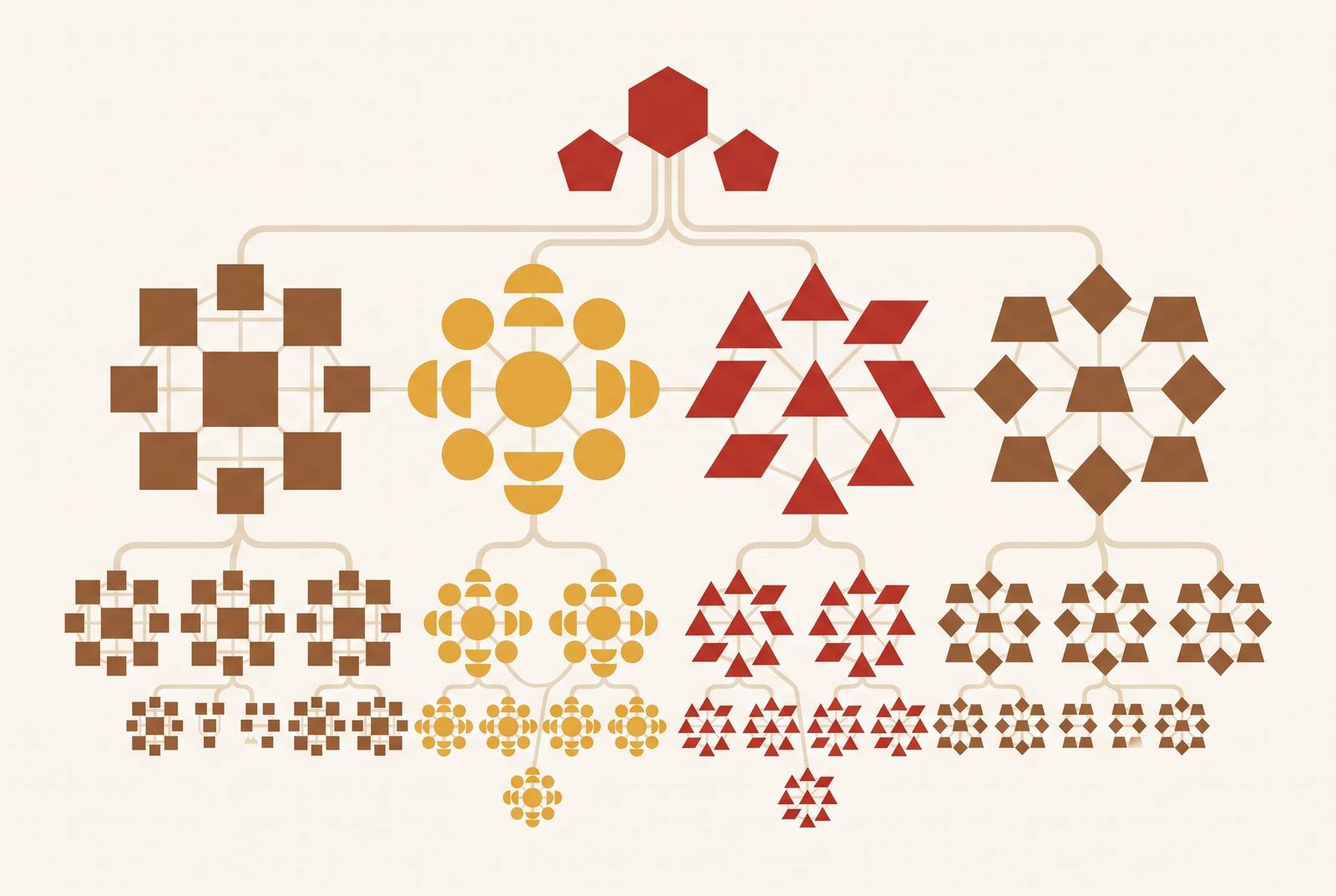
At around the 500-employee mark, RevOps shifts from a function to a department because request volume outgrows what a small generalist team can handle. The generalist model that carried a company through its first hundred sales hires, one or two people juggling CRM tickets, dashboard requests, and quota math, cannot survive the volume of requests that come with a sales org this size. What replaces it is a pod-based structure with named ownership, formal reporting lines, and enough specialization that no single person is expected to know everything.
The structural turning point at 500 employees for RevOps
The failure mode before this point is well documented and almost always the same: a company hires its first ops person, hands them thirty different problems, and then wonders why that person spends all day firefighting instead of building anything durable. That is a structural mistake, not a hiring mistake. It is a structural one. One or two generalists can cover CRM administration, basic reporting, and process cleanup when the sales org is small enough that requests trickle in. Past a certain volume, the requests arrive faster than any generalist can triage them, and the function collapses into reactive support work.
At roughly 500 employees, that ceiling gets hit. Industry benchmarks for large companies at this size point to split teams, one focused on strategic RevOps, another on systems RevOps, typically staffed with ten to twenty or more specialized professionals. That is a different kind of organization, not a modest expansion of headcount. It is a different kind of organization, built around pods with distinct mandates rather than a flat team of people who each do a little of everything.
What the org chart looks like at this scale
By 500 employees, RevOps typically runs as a substantial department organized into pods rather than a single reporting line. A VP of RevOps sits at the top, and beneath that VP sit Senior Managers or Directors, each running one pod. This is a leadership structure: decisions about systems, analytics, enablement, and compensation each have an owner who reports up.
Compensation at this level reflects the seniority the role now requires. A VP of RevOps typically earns between $180,000 and $280,000, and pod leads earn $140,000 to $200,000. Those numbers matter less as a benchmark for pay bands and more as a signal: this is now an executive-level function, not a support role bolted onto sales management.
Staffing ratios back this up. The commonly cited benchmark is one ops person for every fifteen to twenty-five quota-carrying reps. At 500 employees with any meaningful sales headcount, that ratio implies a real team.
What the Systems pod owns at this scale
The CRM Administrator role that got a company through its early growth stops being sufficient here. It expands into a full Systems pod, usually a dedicated manager plus one or more specialists, because the scope of the work has outgrown what a single admin can carry.
That scope includes CRM architecture and data governance, procurement and retirement decisions across the tech stack, and integration management spanning marketing automation, sales engagement tools, customer success platforms, and finance systems. The Systems pod is, in effect, responsible for the single source of truth. Without one team owning that truth, every other pod ends up working from a different version of the numbers, and forecasting stops being reliable because nobody agrees on what the pipeline actually contains.
This is not a one-time cleanup job, either. ZoomInfo data puts B2B contact data decay at roughly 25 to 30%, as a meaningful share of CRM records go stale within a year through job changes, company moves, and simple neglect. The Systems pod exists to run against that decay continuously, not to fix it once and move on.
What the Analytics pod owns
Analytics splits off from general reporting at this stage into its own pod, staffed with dedicated analysts reporting to a pod lead. The work here is forecast modeling, pipeline velocity analysis, stage-by-stage conversion rates, scenario planning, and the reporting that goes in front of the board.
That last piece carries real weight. A VP of Revenue Operations at a 500-person company is expected to defend forecast methodology to senior leadership, and the Analytics pod is what makes that defense possible. Without a dedicated team producing that modeling, the VP is left explaining numbers built on assumptions nobody stress-tested.
The two analyst levels split cleanly. The Senior Analyst owns the models and the scenario work, which shapes how leadership thinks about risk and upside. The Analyst handles the weekly cadence: reporting, data validation, dashboard upkeep. At 500 employees, the volume of work typically demands dedicated coverage for both model-building and day-to-day maintenance.
What the Enablement pod owns
Enablement becomes its own pod, usually led by an Enablement Program Manager with a defined mandate, instead of being split between sales managers and RevOps generalists. That mandate covers onboarding new revenue-facing hires, making sure the tech stack actually gets used rather than just licensed, keeping process documentation current, running training whenever a process or system changes, and acting as the go-to answer for reps with workflow questions.
This is now a full-time job. RevOps teams are expected to drive continuous training and support across every department that touches revenue, and at this headcount that expectation cannot be met by someone doing it between other tasks.
The stakes are concrete. A well-documented pattern in this space shows reps spending a large share of their workweek on non-selling tasks, administrative work, tool friction, process confusion. Enablement's job is to push that number down, and every hour clawed back from friction is an hour returned to selling.
What compensation operations owns inside RevOps at this scale
Commission management outgrows the Sales Operations generalist somewhere well before 500 employees, but by this point it needs a named owner inside RevOps, distinct from territory design and quota modeling. That ownership covers compensation plan administration, payout calculation accuracy, the dispute resolution process, tracking clawbacks and accelerators, and the handoff to Finance for payroll and accruals.
The urgency here is not theoretical. Only 27% of companies report having fully automated their end-to-end commissions process. The majority are still running payouts through spreadsheets that were never built for this volume. At 500 employees, that is structural exposure, not an inconvenience. It is structural exposure.
Compensation operations is a genuine intersection between RevOps and Finance, and the output has to satisfy both sides. Finance needs deal-level attribution, not just a single payout figure per rep, because that attribution supports accurate accrual and compliance reporting. A number that only tells payroll what to pay a rep is not enough. Finance needs to see where that number came from, deal by deal.
Why spreadsheet-based commission management breaks at this headcount
Past a certain team size, spreadsheets stop being a viable system of record for commissions, and 500 employees puts most sales orgs well beyond that point. Formula drift, version conflicts, and manual entry errors accumulate to the point where accurate payouts become structurally difficult, not just occasionally wrong.
Five signs appear when compensation ops is bottlenecked this way. Reps dispute payouts every single cycle, because when they can't see how their number was calculated, any surprise triggers a challenge, and each challenge costs the ops team hours to resolve. Any change to the comp plan means rebuilding the sheet from scratch, since spreadsheets encode logic inside formulas that break the moment rules change, whereas structured software stores those rules as data that updates without a rebuild. There's no timestamped audit trail, so when a dispute or an audit does happen, there's no way to show what calculation ran, on what data, on what date. Finance can't get deal-level attribution out of the process, because aggregating everything down to one number per rep destroys the underlying data that ASC 606 accrual reporting actually requires. And the admin labor compounds every cycle: not one big cost, but reconciliation hours, overpayment corrections, and dispute resolution time that all grow heavier as headcount grows.
None of this appears as a single line item, so it gets underestimated. The real cost of running commissions on spreadsheets hides inside labor, overpayments, and a slower close, and that burden compounds as headcount grows. The Aberdeen Group found that shadow accounting, reps building their own side calculations because they don't trust or understand the official number, can consume 25 to 50% of a sales rep's monthly time. At 500 employees, that is a direct drag on revenue capacity, not an administrative footnote.
Commission software features to look for at this scale
Choosing commission software at this size is a joint call between RevOps and Finance, and the platform has to satisfy both sides at once: the operational workflow RevOps runs day to day, and the audit and accrual standards Finance is on the hook for.
A handful of capabilities matter more than the rest. The platform needs to ingest data from the CRM or from files without forcing a rip-and-replace of existing workflows. It needs structured rule configuration, tiered rates, accelerators, SPIFs, clawbacks, and splits handled as named, adjustable rule types rather than buried inside formulas. It needs a deal-level audit trail, so every calculation traces back to its source data, the rule that was applied, and the date it ran, which is the baseline Finance and any dispute process both require. Reps should be able to see their own earnings, quota progress, and deal-level breakdown in real time, without filing a ticket to get an answer. Pay periods need to lock with a logged approval chain behind them. Output needs to flow straight into payroll without manual reformatting. And Finance needs accrual support: deal-level data that feeds into the revenue recognition and cost-capitalization reporting it is responsible for.
Pricing structure matters just as much as feature checklists at this scale. Seat-based pricing punishes a growing team for the act of hiring, while pricing models that scale with plan complexity rather than headcount can keep the platform affordable as the company scales.
Security deserves the same scrutiny applied to payroll data, because that is functionally what commission data is. Encryption in transit and at rest, a real audit trail, and clear data-handling policies are the minimum bar, not a nice-to-have.