Centralized vs Embedded RevOps at Series B
The choice between centralized and embedded teams determines whether your forecast stays coherent.
Series B is the point where RevOps shifts from an accident to an architecture decision. Somewhere between $10M and $50M ARR, the ad hoc arrangement that got a company to this point, usually a VP of Sales with a spreadsheet habit or one overworked generalist, runs out of runway, and the choice between a centralized team and an embedded one starts determining whether the forecast means anything.
The GTM complexity that arrives at Series B is real and specific: multiple sales segments, a customer success function that actually carries renewal risk, marketing that owes the board attribution numbers instead of vanity metrics, and a CRO or CEO who wants one pipeline number instead of three competing versions. Most companies show up to this moment with ops handled the way it always was, informally, by whoever had the bandwidth. That arrangement degrades quietly at first, then loudly. Process misalignment is a widely recognized barrier to growth among B2B companies, and at Series B that misalignment begins costing quota attainment, forecast accuracy, and rep trust.
What centralized RevOps looks like at $30M ARR and what it is designed to do
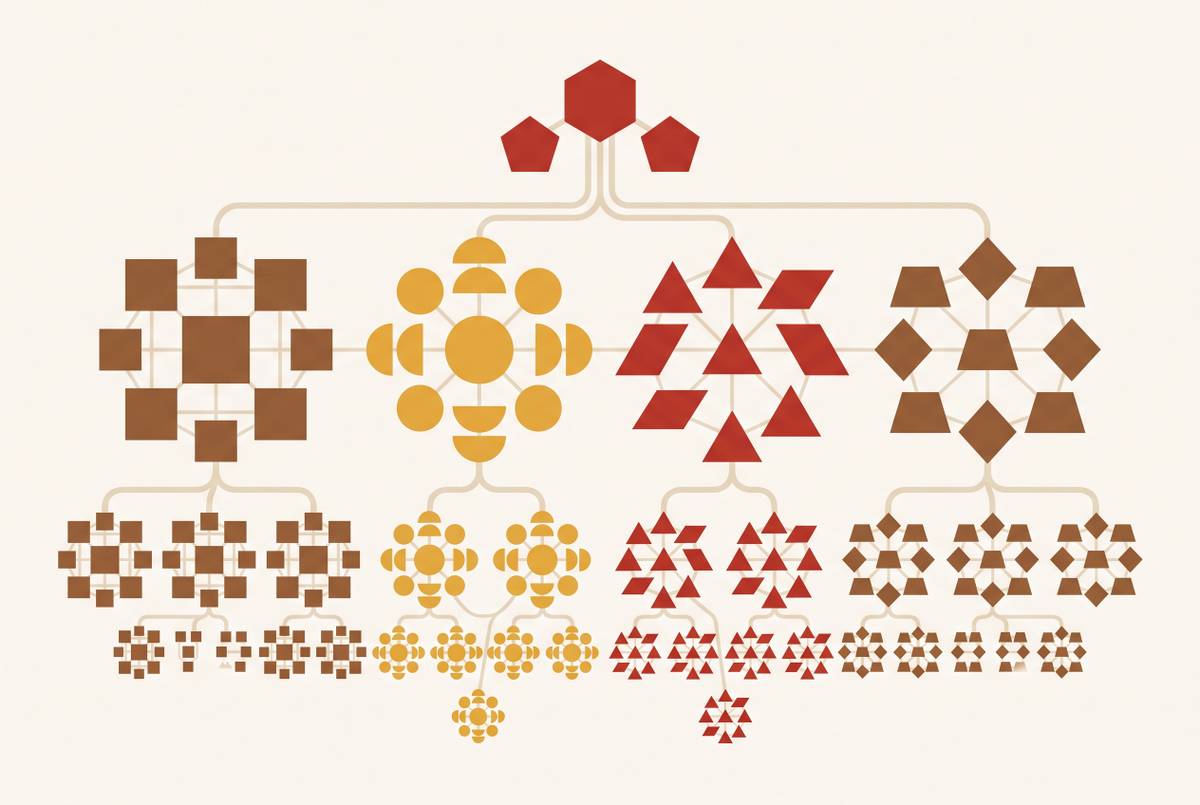
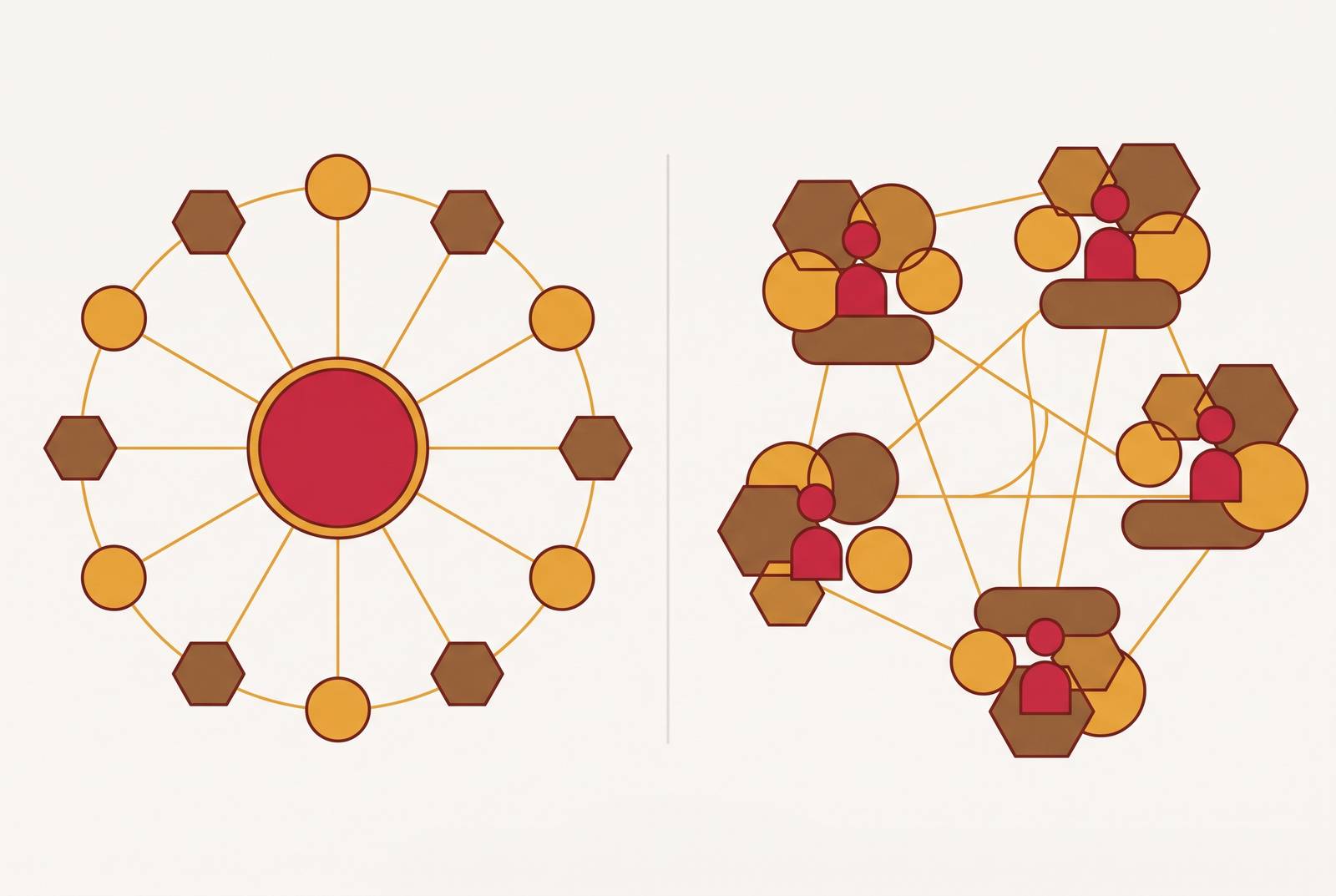
Centralized RevOps means one team, no exceptions. Sales, marketing, and customer success all pull from the same ops function, and none of them gets a dedicated person embedded inside their department. At $30M ARR, that team is typically small, often three to five people, anchored by a RevOps Manager who plays coach and operator at once, owning both the architecture and the daily execution, alongside analysts covering marketing operations and sales operations responsibilities.
The reporting line shapes which function's priorities get addressed first, so it is not a detail to leave loose. The RevOps Manager needs to report to the CRO or the CEO. If that line runs instead to the VP of Sales, marketing ops quietly becomes a lower priority by default, because the org chart makes the decision for them rather than any person choosing it. Whoever the RevOps leader reports to is whose problems get solved first.
What this model is actually built to deliver is standardization: one set of data definitions, one version of the pipeline number, one consistent process running across all three revenue functions, and a single owner of the systems that touch them. It is designed for consistency across functions rather than speed in any one function. It is designed so that nobody is arguing about whose CRM field is the real one.
When the pressure to adopt the embedded model first appears
The embedded, or federated, model flips the org chart. Each function gets its own ops person, a Marketing Ops Manager, a Sales Ops Manager, a CS Ops Manager, and each reports directly into the function they support rather than into a shared ops leader. A central layer still exists above them, with a VP of RevOps and a Revenue Analyst who own the forecasting model, the shared data standards, and the reporting architecture that ties the three functions together.
Pressure to move toward this model appears first as friction, usually when one function's ops needs start outpacing what a shared team can turn around fast enough. A sales team running two motions with different cycle lengths and different comp structures needs someone embedded who understands the workflow cold, not someone splitting attention across three departments.
The dotted line back to the VP of RevOps is what keeps this from turning into three separate companies operating under one logo. Without it, each embedded ops manager optimizes for their own function's KPIs and loses sight of the integrated revenue picture entirely, because nothing in their job description or their bonus structure asks them to care about it. The hub-and-spoke variant solves part of this by keeping embedded specialists reporting to the RevOps leader rather than to the function they sit closest to, which gives field-level depth without recreating the silos the model was supposed to fix.
The decision factors that determine which model fits a given Series B company
GTM complexity is the variable that matters most, more than headcount, more than ARR. A company running one motion, an SMB AE team paired with outbound SDRs, can run centralized RevOps well into the upper growth stage without strain. A company running two or three distinct motions, product-led growth alongside enterprise sales, or two segments with different sales cycles and different comp plans, needs dedicated ops depth in each function much sooner, because a single shared team can't hold the context switching.
Staffing ratio is a useful signal here. A practical benchmark puts roughly one ops person per 15 to 25 quota-carrying reps. When that ratio gets stretched thin on a centralized team, specialization tends to follow, because the volume of requests from any one function starts crowding out the others.
What the function actually needs right now also shapes the decision. Standardization needs, data quality, forecasting consistency, comp accuracy, favor centralized: one owner, one standard, no disputes about whose number is correct. Speed and field responsiveness needs, a sales team iterating fast, a CS team rebuilding its health-scoring model in real time, favor embedded, because the person doing the work needs to sit inside the workflow, not review it from a distance.
ARR offers a rough proxy but a blunt one. Centralized tends to be the right model for growth-stage companies under $100M ARR, with federated making more sense somewhere between $100M and $500M. The Pedowitz Group's analysis places the federated model appropriate for growth-stage companies, potentially earlier than the $100M ARR threshold. The disagreement itself is instructive: ARR alone doesn't settle the question, and GTM complexity and motion count matter more at the margins than the revenue figure does.
The consequences of picking the wrong structure at Series B
Centralized RevOps held past its useful life turns into a bottleneck, and the pattern is visible in the same way every time. Sales wants faster CRM changes, marketing wants more automated workflows, CS wants a new health-score model, and all three requests land on the same two people, who cannot triage fast enough to keep anyone happy. This bottleneck tends to form as a company approaches $75M to $100M ARR, though Series B companies at the top of that range, $40M to $50M ARR with fast-growing teams, can hit it earlier than the ARR benchmark suggests. The damage isn't confined to one function either. RevOps loses credibility across sales, marketing, and CS all at once, and rebuilding trust in an ops function is a slower, harder project than rebuilding its org chart.
Federated without the coordination layer breaks differently, but just as badly. Three ops managers who rarely sit in the same meeting and answer to three different bosses is not a RevOps model, it's federation in name only. Data fragmentation follows almost immediately: each function defines its own terms, and the pipeline number splits back into three versions, reproducing the exact problem centralization was supposed to solve.
Comp and commission data is especially exposed in this failure mode. When Sales Ops calculates payouts independently of a shared standard with Finance and RevOps, errors compound quietly across plans, and reps stop trusting the number on their statement, which is one of the fastest ways to lose a good rep.
Then there's the problem of AI accelerating and amplifying these issues faster than it would have a few years ago. Teams without data and process alignment feed that misalignment straight into whatever AI tooling they adopt. Bad data going into a routing agent produces bad routing decisions at scale, and a flawed forecast fed into an AI model doesn't get corrected, it gets amplified. A RevOps structure that was merely inconvenient in 2022 becomes actively dangerous in 2026 once AI tools are layered on top of it.
Forrester found that companies with well-structured RevOps saw 36% higher revenue growth than those running fragmented ops teams. That statistic reversed becomes the cost of getting the structure wrong across a full Series B growth cycle, not a hypothetical, a measured gap.
How the fractional and hybrid options fit into the Series B picture
Smaller or earlier-stage Series B companies increasingly reach for a fractional RevOps leader instead of hiring a full-time VP, and the logic holds up. A fractional leader brings pattern recognition from having built this before, along with playbooks that don't need to be invented from scratch, at a fraction of what a full VP hire costs before the company is ready to fully use one.
What fractional does well is foundational work: data standards, CRM governance, comp plan structure, and forecasting methodology, all built faster than an internal hire who is learning the company and the job simultaneously. What it cannot sustain is day-to-day depth across three GTM functions running at once. Fractional is a bridge, not a permanent home for the function, and treating it as one produces the same bottleneck a stretched centralized team runs into.
Heading into 2026, the strongest fractional RevOps leaders bring AI implementation experience alongside process design, not instead of it. Governance over how AI tools get deployed across sales, marketing, and CS has become part of the RevOps mandate.
Building the RevOps structure to support commission accuracy and comp plan integrity from the start
Comp administration is not a tooling decision made after the org chart is settled, it is a structural dependency baked into the org chart itself. Whichever model a Series B company picks, somebody owns commission plan design, calculation, and payout, and the accuracy of that work depends entirely on whether the underlying data, the plan logic, and the approval chain sit in one place or three.
Comp plan complexity outpaces headcount growth at this stage almost every time. Tiered rates, accelerators, SPIFs, clawbacks, and split-credit rules for shared deals all multiply well before the ops team has the hours to manage them by hand, and a spreadsheet that worked at an earlier stage starts producing quiet errors once the business scales beyond it.
Centralized RevOps has a clear structural advantage here: one team owns the data standard, the quota tracking, and the payout calculation. That produces one audit trail and one approval workflow instead of three competing versions. The federated risk runs the other direction. When Sales Ops calculates payouts on its own, disconnected from Finance and from RevOps' shared standards, small errors compound quietly across plans, and once reps can't reconcile what they earned against what they closed, they start keeping their own shadow spreadsheets, which is a trust problem no amount of process documentation fixes after the fact.
Purpose-built commission software addresses the most error-prone step in this cycle directly: pulling deal data from the CRM, applying plan logic including accelerators, SPIFs, and clawbacks, and producing a statement that both Finance and Sales can actually audit and trust. That holds true regardless of which RevOps model a company has chosen, because the software solves the calculation itself; the org chart still has to determine who owns the outcome.
A practical sequencing guide for Series B RevOps structural decisions
Start by writing down the mandate before drawing the org chart. Decide what RevOps actually owns at this stage, such as data and systems, forecasting, comp design, enablement, or some subset of those, and put it in writing. A structure without a defined mandate becomes whatever the loudest revenue leader happens to ask for that week; that's a default with extra steps, not a strategy.
Next, map GTM complexity honestly instead of aspirationally. Count the distinct sales motions running today, the number of active comp plan types, the number of quota-carrying reps, and the ARR sitting inside expansion driven by the customer success team. These four inputs show whether centralized can hold for another year or whether specialization is already overdue.
Then choose the model that matches where the company actually is, not where the board deck says it's headed. Building a federated structure for a $20M ARR company running one sales motion adds coordination overhead with no volume to justify it. Building a centralized structure for a company already running three distinct GTM motions creates a bottleneck before long, regardless of where ARR sits.
Finally, put the governance layer in place before anything else moves. A centralized RevOps control tower, one accountable owner of the revenue engine with real authority over data standards, forecasting, and comp integrity, is the foundation that makes every later structural change actually work instead of just rearranging the same problems under a new heading.